Category : Traffic

International insurance card/ Former green card
The green card, also known as the International Insurance Certificate or CIS certificate, is a document that proves car insurance abroad. Previously, it was mandatory to carry the physical green card when driving in many European countries.

However, regulations can change, and there was discussion within the EU to remove the requirement to carry a physical green card as electronic systems become more sophisticated and information is more easily accessible.

At the time of writing, the CIS certificate is still a useful document to have with you when traveling through Europe, even if it is not always strictly necessary. After all, it shows that you are insured and can reduce any discussions or problems at a traffic stop or after an accident.

If you are going to travel abroad with your car with Spanish plates, do not forget to ask us for your international certificate. The insurance companies are more and more strict with the provision of this document and they hardly give it for a period longer than 3 months. This is to avoid insurance fraud, as you are not supposed to drive your Spanish car abroad continuously unless it is for professional reasons and the vehicle is registered as a professional vehicle.

If you are leaving for abroad, ask us for the CIS certificate a few days in advance. We will provide you with it free of charge in paper or digital version.

What on-board documents are required in Spain?

Required documents according to the DGT

We often read on facebook or other social media all kinds of fabrications of what you should or should not have in your car of documents. What are the mandatory attestations or supporting documents that you, as a driver, must be able to present at all times when official law enforcement agencies ask for them?

We would like to give drivers the correct info once and for all and also where you can check the facebook phrase or cafe talk for their accuracy in the future. We explain this briefly and at the bottom you can check the information via the source.

What documentation should you carry in your vehicle?


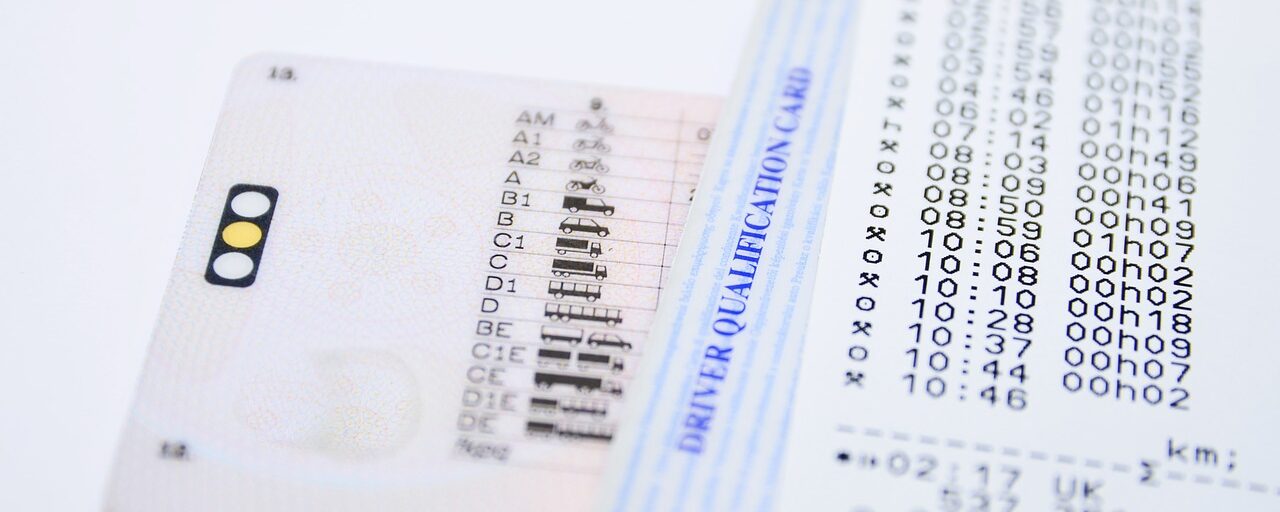
When driving, there are 3 documents you must always carry with you: driver's license, registration certificate and the ITV card (inspection certificate).

These are the three documents that, for any type of ride, you must carry and be valid when you drive:

  1. Driver's license.
  2. Vehicle registration certificate.
  3. Technical Inspection Card (ITV) of the vehicle.

Always have these 3 documents, either original or legalized, with you when you drive. This will be the first thing an officer will ask of you if you are stopped or involved in an incident. Remember that since 2008 it is no longer mandatory to have the insurance policy or final receipt in the car.

These documents are also required for rental vehicles. Before driving a rented vehicle, check that the vehicle contains the required documentation.

We ourselves at Segurantis recommend that in addition to these mandatory on-board documents, you should also always have your insurance documents and a collision form handy in case you have an accident.

If you don't have insurance documents or collision forms feel free to jump in and get a free copy. Would you also like a price competitive and fully comprehensive insurance for your vehicle with additional legal coverage up to 10, 000 euros (interpreter included)? Then feel free to make an appointment and we will look into the possibilities for you!

Or you can get an instant quote for your vehicle through our link below:

Source: https://www.dgt.es/nuestros-servicios/tu-vehiculo/documentacion-de-un-vehiculo/que-documentacion-debes-llevar-en-tu-vehiculo/#:~:text=A%20la%20hora%20de%20circular,y%20tarjeta%20de%20la%20ITV.&text=Hay%20tres%20documentos%20que%20debes,Permiso%20de%20Conducir%20del%20conductor.

Environmental zones vehicles in Spain

In Spain, we are also coming to a tightening of standards for emissions from means of transport. Until now, it was only Madrid and Barcelona where there are rules for vehicles that emit exhaust but with the 2023 plan, the government wants to expand these low emission zones.

First of all, your vehicle will have to be equipped with a sticker - an environmental sticker that is clearly visible if you wish to travel in these low emission zones. The Spanish government wants all cities, municipalities and the islands with more than 50,000 inhabitants and/or some with more than 20,000 inhabitants to introduce low emission zones.

As in other countries, at the entry roads to these areas there will be road signs indicating the environmental stickers with which you may enter the areas. Importantly, this sticker is not (yet) available for foreign vehicles. So keep in mind when entering these areas because foreign vehicles will also be subject to these rules. A Danish, German, French or Austrian environmental sticker is also valid in Spain. Those who do not have a valid foreign environmental sticker can apply for a long-term or daily permit.

For vehicles registered in Spain, there are four Spanish environmental stickers (distintivos ambientales):

  • Blue - 0: no emissions.
  • Green-blue - eco: hybrid and gas-powered vehicles that meet the criteria of the green sticker.
  • Green - C: gasoline vehicles registered in 2006 or later; diesel vehicles registered in 2014 or later; vehicles with more than 8 seats and heavy vehicles, both gasoline and diesel, registered in 2014 or later. Gasoline vehicles must meet Euronorm 4, 5 or 6 and diesel vehicles must meet Euronorm 6.
  • Yellow - B: gasoline vehicles registered in 2000-2005; diesel vehicles registered in 2006-2013; vehicles with more than 8 seats and heavy vehicles, both gasoline and diesel, registered in 2005-2013. Gasoline vehicles must meet Euronorm 3 and diesel vehicles must meet Euronorm 4 or 5.

There is no sticker for other vehicles. The stickers can be obtained at Spanish post offices and cost €5.

More info:

For more information, see Spanish government websites:

sede.dgt.gob.es/es/vehiculos/distintivo-ambiental, dgt.es, pegatinas-dgt.com/en/faq.

Info on foreign environmental sticker:

sede.dgt.gob.es/es/vehiculos/distintivo-ambiental/equivalencia-distintivo-ambiental-ue.shtml

9 in 100 drive around uninsured

Almost 3 million road users in Spain drive around uninsured

According to a study organised at the request of the Spanish Parliament, a number of large Spanish insurance companies, together with the body managing the Disaster Natural Fund, have investigated how many uninsured vehicles are driving around in Spain. The results are alarming as they show that more than 2.9 million cars are driving around without the compulsory motor insurance. That corresponds to approximately 9 out of every 100 vehicles on the road every day.

Not having a valid ITV (MOT) is considered a serious offence with a fine of between 200 and 500 Euros but not having car insurance in order is an even more serious offence and can be fined between 601 and 3,005 Euros.

The Spanish road traffic law states that failure to comply with the obligation to have insurance cover makes it illegal to drive and that uninsured driving is punishable by fines of at least EUR 600 to EUR 3 000. The car is also confiscated and all costs are borne by the uninsured owner of the vehicle. A prosecution up to and including imprisonment is possible if several offences have been committed with the uninsured vehicle.

In Spain, every owner of a vehicle must have at least a civil liability insurance that covers the damage it may cause to third parties. However, the number of uninsured drivers is worrying. In Spain, this phenomenon is called the 'zombie cars', that is, cars without compulsory minimum insurance. In 2020 alone, more than 20 000 uninsured vehicle accidents were recorded.             

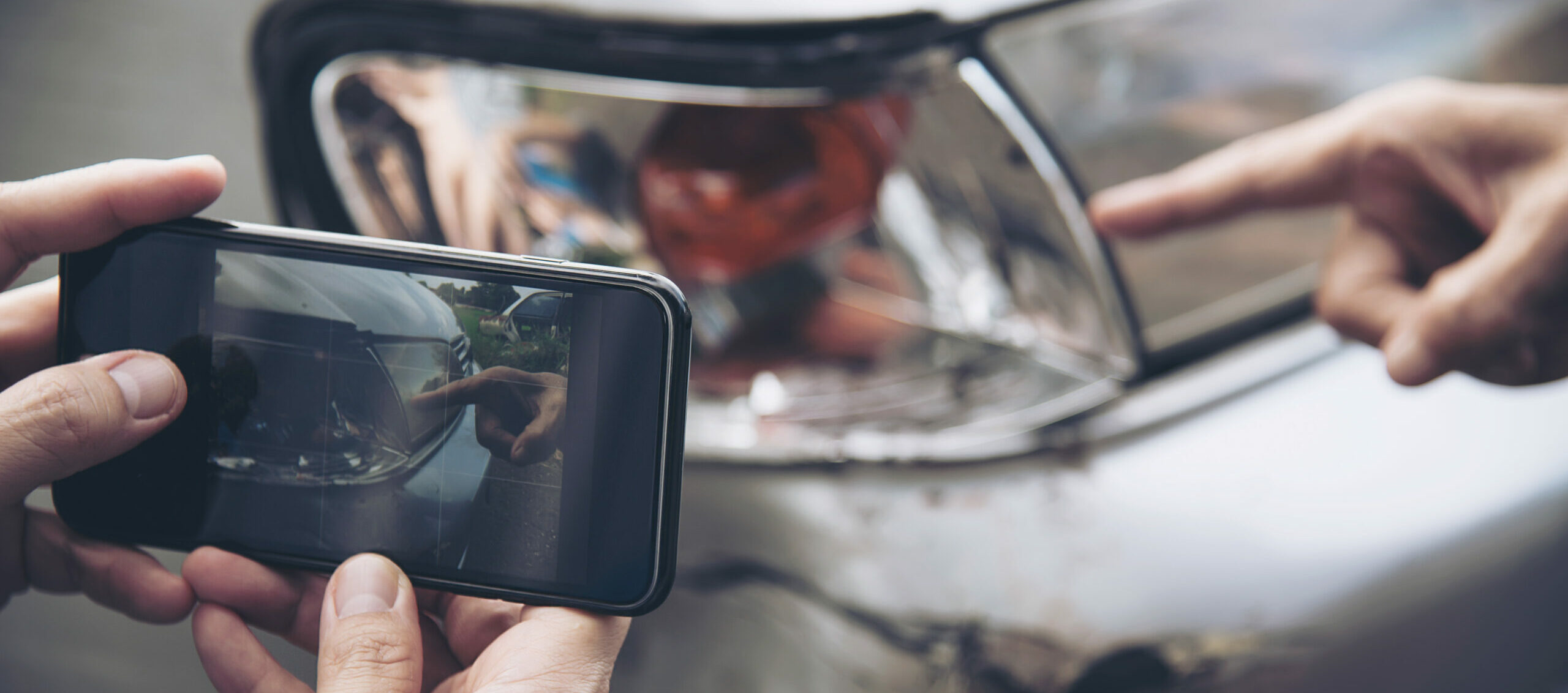
If an accident occurs in which the other party is at fault and is not insured, a collision form should be filled in giving details of the other party's driver and vehicle or, if this is not possible, call the authorities - the Guardia Civil or Policia Local - so that they can report the incident. If the affected party offers you a sum of money for not calling the police, it is better not to accept this, as injuries may occur or the damage to the car may be more serious than it appears at first sight.

Once the insurer has been informed, it will claim all damages, both material and personal, from the Disaster Relief Fund - Consortium - the body responsible for compensation in these cases. This compensation comes from the money collected from fines imposed on drivers who drive without compulsory insurance and is included in the premium you pay for your insurance. Once the victim has been compensated, the Insurance Compensation Consortium will claim all amounts from the guilty party.

As it stands, you know that if you are involved in an accident with an uninsured vehicle , the legal "agony" that is involved is slow and nerve-racking. Especially when this happens in a different language in a different country with different customs and operating processes. It is not easy to settle a dispute when all parties have agreed let alone when one of the parties is not in order and cannot pay.

Hopefully, it will not happen, but if you are involved, adequate legal cover is not a must, it is a lifesaver. Unfortunately, almost all vehicle insurances cover only limited legal coverage which in most cases is only up to 1,500 euros. You also realise that in case of an uninsured vehicle, the process of obtaining compensation will take a long time and this standard coverage is not sufficient. An additional insurance is then the solution.

Additional legal coverage can be obtained quickly for about 30 euros a year. The main coverage is, of course, the more extensive sum of money in legal coverage that the insurance offers and the additional support throughout the process which, for example, translates into the provision of an interpreter. The legal coverage for the follow-up of the file is standard 10,000 euros and continues at a reduced rate for the policyholder in case the process drags on. The team that defends you is usually made up of international lawyers with offices or branches throughout Europe, so that you can also go to your home country with questions and information.

Sources

What can Segurantis do for you?

We cooperate with several international providers that offer insurance with legal coverage in Spain and internationally. Do not hesitate to contact us for more information on the possibilities.

Avoid fines if you are on the road in Spain

Mandatory or non-mandatory

The items listed apply if you are driving with a Spanish licence plate - so your car is registered in Spain.

Fines for each item you do not have in order can amount to EUR 500.00.

Things may change in the future, so always check the latest news on the DGT website(www.dgt.es).

Below are 5 items that should be in the car:

  • Warning triangles: In Spain it is compulsory to have two warning triangles. In case of a breakdown, you must place a triangle in front of and behind the car (50 metres respectively). Since 01/06/2021, the warning triangle may also be replaced by the V-16 help flash light. From January 2026, only the V-16 help flash light will be valid.
  • Safety vests: the fluorescent vest must be within reach of the driver. We recommend that the number of vests in the car should be equal to the number of safety belts. That way, if there is a breakdown and you have passengers on the track, everyone can wear a vest when leaving the car.
  • Onboard documentation: Spanish onboard documents must be presented at all times. There is also a possibility to save your board documents on your mobile via DGT's digital app.
  • ITV sticker: A sensitive issue for many, but it is and remains mandatory. However, the sticker is increasingly disappearing from the street scene, although it is still compulsory.
  • Spare wheel or spare kit: You must be able to change or repair a tyre at any time. There are exceptions like run-flat-tires. If you cannot change your tyre yourself, you have to be able to call on a towing service that has insured you.

!!! The driver must at all times be able to produce his or her identity card and valid driving licence. In the case of Spanish-immatriculated vehicles, the road police can immediately find out who owns the car, whether there are any outstanding debts such as road tax, fines that have not been paid and whether the car is insured, on the basis of the registration certificate.

Source https://www.dgt.es/es/

What can Segurantis do for you?

Go to the overview of our services.

Traffic fines in Spain

Traffic fines in Spain and how to pay them

If you are travelling through Spain by car, motorhome or moped, you are expected to know the country's traffic rules. Largely, the rules are the same across the EU with a few exceptions. A bigger difference is the fines which can vary from country to country.

The most common fines in Spain for foreigners are those for speeding and parking. But also the use of the mobile phone or operating digital devices (such as the GPS) while driving are increasingly and more severely punished.

If you receive a fine, you will have a 50% discount if you pay the fine on the spot or within a period of 20 days. Please note that not all fines have this preferential rate and repeat offenders do not receive this discount.

If you do not live in Spain but are on holiday there and have broken a traffic rule, you are likely to receive a fine in your home country. The national authorities cooperate and will provide data if Spain requests it. A debt collection agency will also be involved if the traffic offender refuses to pay the fine.

Fines can be paid via the DGT (Dirección General de Tráfico) online portal or if your municipality works with the SUMA, you can also go there for your traffic fines.

Drivers with the Spanish driving licence can also lose points on the driving licence. The fines start at 100 euros per offence and can quickly rise to 1000 euros with imprisonment and loss of driving licence.

Paying fines online:

https://sedeapl.dgt.gob.es:7443/WEB_IWPS5_INET/jsp/sincertificado/index.jspx?indexIdioma=es

What can Segurantis do for you?

Go to the overview of our services.

The Spanish driving licence

Validity of your "European" driving licence when you take up residence in Spain

We have written about this in the past and it is still a point of discussion: the Spanish driving licence. Who needs it, what are the conditions and how can you get it?

On the DGT website, you will find an extensive page of text and links on this subject, which in our opinion is not easy to decipher. The link can be found below.

However, there is also another Spanish government website that communicates the information released by DGT in a slightly lighter way to the reader. This link can also be found below.

In this article, we will elaborate on what the last source tells us. If you read under the heading Validity of an EU driving licence, you can read there the conditions for when you should claim a Spanish driving licence once you have become a resident.

Mandatory or not

Firstly, you are completely free to choose to exchange your current European valid driving licence with a Spanish driving licence (also European valid). There is no obligation for you to exchange your driving licence. If you do not wish to drive any more, you do not need to exchange your driving licence. However, if you wish to continue driving your vehicle, there are rules that apply.

As it is written, after your residency you must apply for (exchange) a Spanish driving license if you wish to continue driving around. The period in which you need to do this can vary. If you have a driving license of indefinite duration or one that is valid for more than 15 years, you must do the conversion within 2 years of your residency (we are talking about AM, A1, A2, A, B and BE).

Another reason to renew your driver's license to a Spanish one is in case of loss, theft, or that the license expires within 2 years. You cannot renew the driving license in the previous country of residence because you are no longer registered there.

Here comes the point of discussion or the cause of confusion. In Belgium we still know the paper version and also the newer card version. On both, the validity of your driver's license(proof that you can drive a vehicle) is on mostly UNLIMITED. However, the major difference between the two is that the card version has an ADMINISTRATIVE VALIDITY and the paper version does not. Is the Administrative validity the same as the validity of your driver's license? Because in reality we may interpret that the proof you have obtained on the ability to drive a vehicle is valid indefinitely. What the difference is we leave to the experts in traffic law within Europe).

Where do you apply for a Spanish driver's license?

You apply for your Spanish driver's license at a Gestor or you go and apply for it yourself at Jefatura Trafico.

Via a Gestor

  • Controls the entire procedure
  • The procedure is generally faster
  • If problems arise, the gestor solves them

You do the application yourself

  • Provide all documents and complete the application procedure
  • Twice to Jefatura Trafico (if all goes well)
  • Spanish language skills
  • Take into account long waiting times
  • Solving problems yourself

- —

If you wish to convert your driving licence, please contact us at info@segurantis.com.

Website DGT:

https://sede.dgt.gob.es/es/vehiculos/duplicados-renovaciones/permiso-circulacion/index.shtml#.

Website Administracion Gobierno de España:

https://administracion.gob.es/pag_Home/en/Tu-espacio-europeo/derechos-obligaciones/ciudadanos/vehiculos/permiso-conduccion/validez-canje-reconocimiento.html

What can Segurantis do for you?

Go to the overview of our services.

The international motor insurance card - The green card

Mandatory or non-mandatory

The international motor insurance card, also known as the green card, is proof that a motor vehicle is at least covered by insurance for civil liability. The purpose of this document is to identify the countries in which motor insurance is valid. The Green Card looks the same everywhere in Europe, so the proof is recognisable and "readable" by everyone.

In this article, we focus on the use of these documents when driving around in Spain with a Spanish car.

No longer compulsory in Spain - Spanish vehicles

The international motor insurance card is an on-board document that you can keepon your mobile phone or with your on-board documents, but it is no longer compulsory in Spain. If you take to the public roads in Spain, you must be insured for at least your civil liability - the public authorities in Spain can check this at any time on the basis of the car's number plate.

If it is advisable to keep your insurance documents on your mobile phone, don't forget to share the document if other drivers are also driving the car. It is always useful to have your details at hand in case of a check-up, an accident or when you go to the technical inspection.

International

The International Motor Insurance Card is valid in the countries which are either not crossed out in the list of countries mentioned on the card. Or in the countries mentioned on the card. If you are travelling to a country which is not covered by the international motor insurance card, you canask your insurerfor a guarantee extension for that country. Alternatively, you can take out additional insurance at the border for the country you are visiting.

When travelling abroad, we recommend that you always carry a paper version with you. That way, if there are technical problems or if your smartphone is stolen, you can still produce the necessary documents. It is also possible that the authorities of the visited country will only accept a printed document.

It is true that in most countries, the police use the number plate to check whether there is insurance cover (so even foreign number plates are included in a central database). But beware, not in all countries the police works this way and they will still ask for your green card. Before you leave, always find out what the rules are in the country you are visiting.

The green card for the caravan or trailer is mandatory in more countries. The idea behind this is that the insurance of a caravan with its own registration plate is often not registered. Spain is, among others, a country where the green card for a caravan or trailer is mandatory if it has a different licence plate.

Digital or paper version

The insurance documents can be provided in various forms and are recognised in the following forms:

  • Can be printed on both green and white paper
  • Now also exists in electronic form so that you can save it on your mobile
  • Has black letters on a white background
  • Does not need to be double-sided, can be on 2 documents

Some insurers offer the insurance certificate only in digital form. In that case, you can save your insurance card on your mobile phone or print it out yourself and keep it with the board documents. More and more, the paper version will disappear and you will almost be obliged to save your data digitally.

Advantage of the International Insurance Certificate

It is true that the green card has the advantage that you have all the insurance details at hand which are necessary to fill in the claim form in case of damage. Often the authorities where you should be in case of breakdown, accident, broken windows and theft are also mentioned, both at home and abroad.

What can Segurantis do for you?

Go to the overview of our services.

Driver, bike is king!

Drivers of motorised vehicles

Spain has changed its traffic law with respect to drivers of motorised vehicles and cyclists. The adaptation applies especially to these drivers who want to overtake a cyclist. There are two points on which you have to pay extra attention and those are the speed with which you overtake the cyclist and the distance to this cyclist. When not respecting these rules, you can risk a fine of 200 euros and a loss of 3 points of the Spanish driving license.

Reducing road fatalities

DGT, the Spanish traffic authority, wants to reduce the number of traffic accidents involving cyclists by this measure. In the year 2020 alone, 36 cyclists died in Spain. Annually the number does decrease but Spain aims to be a bicycle safe country.

Speed and distance

The theory behind these measures consists of the studies done by the traffic institute, which proved that the greater the distance and the lower the speed the less chance a cyclist will become unbalanced due to the so-called suction effect created during the overtaking manoeuvre.

All public roads

The rules apply on all public roads (where cyclists are allowed of course). If you have to cross the other carriageway to overtake a cyclist, this is allowed as long as safety can be guaranteed. The speed at which this happens has to be 20 km/h lower than the maximum speed on the road.

An overview of all our services?

Go to the overview of our services.

Goodbye warning triangle, welcome V16 flash light

The flash light in traffic

The contents of this article apply mainly to road users in Spain. Vehicles with foreign number plates (not Spanish number plates) must at all times check the traffic regulations of their own country and those of the country they are visiting.

Adaptation of signalling in case of breakdown or accident

Road users in Spain of motorized vehicles and with a Spanish license plate will be allowed to replace their warning triangle with the so-called Help Flash. The device that will replace the warning triangle is called the Help Flash or V-16. This is a kind of signal that can be placed directly from the car on the roof or the side by means of attached magnets. The light works on batteries and can be used as a flashing light in an emergency, hazard marker and as a flashlight.

Current rules

At the moment it is still compulsory in Spain to have 2 warning triangles in the car and for all occupants to wear a yellow jacket* in case of a breakdown or accident (*only outside built-up areas). For foreign vehicles there are other rules but at least 1 warning triangle is mandatory and you should take enough yellow vests.

Improve visibility

The idea behind this comes of course from DGT, the Spanish traffic service Dirección General de Tráfico and aims to improve the safety of road users. This is also a logical fact because the warning triangles require you to travel a distance to place the warning triangle both in front of and behind the car at a distance of 50 m. The flash light is simply placed on the roof.

Easy to place

The device itself must meet some requirements. For example, it must have a battery life of at least 30 minutes and it must be weatherproof. These lights also need to be equipped with a magnet so they can be stuck to the car. An option is to buy the more advanced lights that even have a GPS on board which communicates your location to DGT (via the cloud of DGT 3.0).

When do these rules apply

From 01-07-2021 it is allowed to replace the warning triangle by these lights in case of breakdown or accident. From 01/01/2026 only the use of these lights will be permitted.

What can Segurantis do for you?

Go to the overview of our services.