Category : Insurances

International insurance card/ Former green card
The green card, also known as the International Insurance Certificate or CIS certificate, is a document that proves car insurance abroad. Previously, it was mandatory to carry the physical green card when driving in many European countries.

However, regulations can change, and there was discussion within the EU to remove the requirement to carry a physical green card as electronic systems become more sophisticated and information is more easily accessible.

At the time of writing, the CIS certificate is still a useful document to have with you when traveling through Europe, even if it is not always strictly necessary. After all, it shows that you are insured and can reduce any discussions or problems at a traffic stop or after an accident.

If you are going to travel abroad with your car with Spanish plates, do not forget to ask us for your international certificate. The insurance companies are more and more strict with the provision of this document and they hardly give it for a period longer than 3 months. This is to avoid insurance fraud, as you are not supposed to drive your Spanish car abroad continuously unless it is for professional reasons and the vehicle is registered as a professional vehicle.

If you are leaving for abroad, ask us for the CIS certificate a few days in advance. We will provide you with it free of charge in paper or digital version.

Latest changes to animal welfare law

The new animal welfare law came into effect on Sept. 29, 2023 , but not all of the law's measures are already in place. This is due to the fact that the Spanish government is currently not yet formed or is still in negotiations for a new government formation. It is not yet known when these measures will take effect. Some of the measures yet to be developed are:

  • Liability insurance for all dogs: this insurance will protect dog owners from liability in case of damage caused by their dog. Will separate insurance be required for each animal or can it be combined with an existing home policy that has family coverage, for example.
  • A dog keeping course: this course will teach dog owners how to keep their dogs responsibly. In all likelihood, this is going to be organized by the local authorities but these bodies are also waiting for further instructions.
  • An identification chip for all pets: this chip will make it easier to identify and recover pets (dogs and cats) if they are lost or stolen.
  • There are still issues that are not on point but these are the main ones for now.

Fines

The law provides for economic penalties ranging from 500 to 200,000 euros for people who fail to comply with the aspects of the law that are already in effect. If the violation is minor, the fines are 500 to 10,000 euros; if the violation is serious, the fines are between 10,001 and 50,000 euros; and if the violation is very serious, the fines are between 50,001 and 200,000 euros and the animal will or may be confiscated.

What on-board documents are required in Spain?

Required documents according to the DGT

We often read on facebook or other social media all kinds of fabrications of what you should or should not have in your car of documents. What are the mandatory attestations or supporting documents that you, as a driver, must be able to present at all times when official law enforcement agencies ask for them?

We would like to give drivers the correct info once and for all and also where you can check the facebook phrase or cafe talk for their accuracy in the future. We explain this briefly and at the bottom you can check the information via the source.

What documentation should you carry in your vehicle?


When driving, there are 3 documents you must always carry with you: driver's license, registration certificate and the ITV card (inspection certificate).

These are the three documents that, for any type of ride, you must carry and be valid when you drive:

  1. Driver's license.
  2. Vehicle registration certificate.
  3. Technical Inspection Card (ITV) of the vehicle.

Always have these 3 documents, either original or legalized, with you when you drive. This will be the first thing an officer will ask of you if you are stopped or involved in an incident. Remember that since 2008 it is no longer mandatory to have the insurance policy or final receipt in the car.

These documents are also required for rental vehicles. Before driving a rented vehicle, check that the vehicle contains the required documentation.

We ourselves at Segurantis recommend that in addition to these mandatory on-board documents, you should also always have your insurance documents and a collision form handy in case you have an accident.

If you don't have insurance documents or collision forms feel free to jump in and get a free copy. Would you also like a price competitive and fully comprehensive insurance for your vehicle with additional legal coverage up to 10, 000 euros (interpreter included)? Then feel free to make an appointment and we will look into the possibilities for you!

Or you can get an instant quote for your vehicle through our link below:

Source: https://www.dgt.es/nuestros-servicios/tu-vehiculo/documentacion-de-un-vehiculo/que-documentacion-debes-llevar-en-tu-vehiculo/#:~:text=A%20la%20hora%20de%20circular,y%20tarjeta%20de%20la%20ITV.&text=Hay%20tres%20documentos%20que%20debes,Permiso%20de%20Conducir%20del%20conductor.

Delay animal welfare bill 2023

Just a little more delay in implementing the measures for dog owners

Neither insurance nor a course for dog owners will be mandatory from Sept. 29, 2023 (!). The government acknowledges that it cannot yet apply all the provisions of the Animal Welfare Law "Ley de Protección de los derechos y el bienestar de los animales.

We have waited a while with our communication and told our customers to be patient because we are in contact with several insurance companies, animal organizations and town halls and they already told us to wait with spreading news because they themselves had not yet received clear instructions on how the law will be applied. With this you are now informed about the latest substantiated news.

The lack of a specific regulation forces the postponement of the obligation of some items of the standard that takes effect Sept. 29.

The Animal Welfare Act will take partial effect. Mandatory liability insurance for dog owners, training courses for new owners and the creation of a national pet registry will not yet be a reality, despite the law going into effect on Sept. 29. The reason? These items required specific additional regulations describing their characteristics, and to date, this does not exist.

The Ministry of Social Rights this week sent a circular to veterinary associations and other relevant government agencies acknowledging that the obligation to obtain liability insurance for all dogs will be postponed until the specific regulations are approved. For now, the obligation will remain only for potentially dangerous dogs.

"In strict legal terms, it does not actually apply until the regulatory development of this provision has taken place in accordance with what is set forth therein," the circular says with regard to liability insurance.

"These regulations are in the form of a Royal Decree and a fully functioning government is needed to approve them," ministerial sources said, confirming that the text is ready to be given the green light, pending a change in the political situation.

For the same reason, the entry into force of the training course to own a dog, the national pet registry and the registry of authorized breeders will also be delayed.

Procrastination is not procrastination

Nevertheless, the implementation of the law will come, the only question is when. We ourselves have already taken the necessary measures and can insure your pet according to the legal requirements that are (not yet) applicable. The insurance can be purchased from 35 euros per year (if included in your home insurance).

The rates for dog insurance per se, suppose the law will require that every pet needs a mandatory separate insurance we can offer in different formulas. Where the insurance can be extended from the legally required for 75 euros per year to the mandatory insurance extended with legal coverage and / or medical coverage.

We will keep you posted as more news on the application of the law comes to light.

Thank you.

Below we give you again the full contents of the Animal Welfare Act.

"Spanish animal welfare law: When will it take effect and what are the novelties in 2023?"

Basically, the new animal welfare law consists of three fundamental pillars: stop sacrificing (sacrificio cero), stop abandoning animals (abandono cero) and stop mistreating animals (maltrato cero). This new law is an important step because one in three households in Spain has at least one pet. It is estimated that there are more than 29 million pets in Spain, with dogs being the largest group at 9.3 million, and in order to guarantee the rights of these animals, this animal welfare law was created.

The 10 key points of Spain's new animal welfare law

Although the law is still changing, here are already 10 key points you need to know:

1. Prohibition on leaving a pet alone more than 3 days, 1 day in the case of dogs

The law prohibits leaving our pet or companion animal alone for more than 3 days or 72 hours. This period is reduced to 24 hours for dogs, which must be accompanied before that time.

Moreover, it is also forbidden to regularly keep our pet on terraces, balconies, roof terraces, storage rooms, basements, courtyards and the like or vehicles.

2. The sale of dogs, cats and ferrets may only be made by authorized breeders, without the involvement of intermediaries

In this way, the sale of these pets is regulated, and only those breeders with the relevant licenses are allowed to carry them out. The participation of intermediaries in the process is prohibited, as well as sales by individuals.

3. The classification of potentially dangerous varieties (PPP) remains in place

One of the last-minute changes was the change in the Animal Welfare Act project regarding the PPP Act, which would be replaced by sociability testing and the new designation of special-use dog.

In other words, the breeds Pit Bull Terrier, Rottweiler, Dogo Argentino, Staffordshire Bull Terrier, American Staffordshire Terrier, Fila Brasileiro, Tosa Inu and Akita Inu remain potentially dangerous breeds with all the obligations this entails for their owners: administrative license, short leash, muzzle, not being able to run loose in areas suitable for other dogs. As well as obtaining insurance for PPP dogs specifically designed to protect these breeds.

Regardless, not all has been said, as the General Directorate of Animal Rights remains committed to the idea of repealing the PPP law and introducing a sociability test for dogs classified as potentially dangerous, as well as large dogs.

4. The killing of animals for economic reasons is strictly prohibited

In this way, killing our pets can only be done for health or medical reasons, never for a financial or economic reason.

5. Mandatory sterilization of all cats over six months old

All cats should be spayed starting at the sixth month of life, regardless of the cat's breed, sex or situation.

6. Mandatory identification of cats and ferrets, like dogs, via microchip

In this way, there will be more control over cats and ferrets, as is currently done with dogs. The goal is to reduce abandonment and control several aspects related to these pets.

7. Mandatory responsible dog ownership training, the content of which is yet to be defined

All people who want to have a dog as a pet must prove that they have taken a mandatory course for keeping a dog that will be valid indefinitely. The goal is to train citizens in the proper care and maintenance of their dog. This training will be mandatory for both new owners and those already living with their dog in the home.

8. Obtain and maintain dog liability insurance.

Although it was already mandatory to have liability insurance for dogs throughout the Madrid region, the Animal Welfare Law stipulates that it will be mandatory for all dogs in Spain to have third-party liability insurance, with the aim of insuring any damage they may cause. At Segurantis we have this mandatory insurance for your pet on offer. For a quote do not hesitate to contact us.

9. Future establishment of a list of pets that can be kept at home

Within 24 months of the law's entry into force, the regulation will be adopted that develops an open and national list that will indicate to citizens which species of animals can be kept at home by Spaniards, as well as those species that, although they have been pets in the past, cannot be kept after the new law comes into force.

10. Dogs engaged in specific work, such as hunting, herding or security services, are excluded from this new law

As specified in the Official Gazette, dogs with specific activities such as hunting, herding or security are not covered by this new law, so they do not have to comply with everything it stipulates.

What if you are not in compliance with these new regulations

Not having insurance under the new legislation will be divided into 3 types of penalties: a minor, serious and very serious violation. This will range from a warning if you are not in order to repeated disregard of the rules. Not having a Chip will immediately be counted as serious. Fines will range from light 500 euros to serious 10, 000 euros and a high probability of confiscation of the animal (and the associated costs).

Contact us to set up your liability insurance. Your can regulate as little as 35 euros per year. Contact us for terms and conditions.

Segurantis team is ready for you!

Environmental zones vehicles in Spain

In Spain, we are also coming to a tightening of standards for emissions from means of transport. Until now, it was only Madrid and Barcelona where there are rules for vehicles that emit exhaust but with the 2023 plan, the government wants to expand these low emission zones.

First of all, your vehicle will have to be equipped with a sticker - an environmental sticker that is clearly visible if you wish to travel in these low emission zones. The Spanish government wants all cities, municipalities and the islands with more than 50,000 inhabitants and/or some with more than 20,000 inhabitants to introduce low emission zones.

As in other countries, at the entry roads to these areas there will be road signs indicating the environmental stickers with which you may enter the areas. Importantly, this sticker is not (yet) available for foreign vehicles. So keep in mind when entering these areas because foreign vehicles will also be subject to these rules. A Danish, German, French or Austrian environmental sticker is also valid in Spain. Those who do not have a valid foreign environmental sticker can apply for a long-term or daily permit.

For vehicles registered in Spain, there are four Spanish environmental stickers (distintivos ambientales):

  • Blue - 0: no emissions.
  • Green-blue - eco: hybrid and gas-powered vehicles that meet the criteria of the green sticker.
  • Green - C: gasoline vehicles registered in 2006 or later; diesel vehicles registered in 2014 or later; vehicles with more than 8 seats and heavy vehicles, both gasoline and diesel, registered in 2014 or later. Gasoline vehicles must meet Euronorm 4, 5 or 6 and diesel vehicles must meet Euronorm 6.
  • Yellow - B: gasoline vehicles registered in 2000-2005; diesel vehicles registered in 2006-2013; vehicles with more than 8 seats and heavy vehicles, both gasoline and diesel, registered in 2005-2013. Gasoline vehicles must meet Euronorm 3 and diesel vehicles must meet Euronorm 4 or 5.

There is no sticker for other vehicles. The stickers can be obtained at Spanish post offices and cost €5.

More info:

For more information, see Spanish government websites:

sede.dgt.gob.es/es/vehiculos/distintivo-ambiental, dgt.es, pegatinas-dgt.com/en/faq.

Info on foreign environmental sticker:

sede.dgt.gob.es/es/vehiculos/distintivo-ambiental/equivalencia-distintivo-ambiental-ue.shtml

DEATH INSURANCE

Those who come to live in Spain will first and foremost focus on integrating and getting used to the new living situation. Those who come from the northern regions will especially enjoy the mild, warm climate that prevails around the Mediterranean Sea. This is and remains the main reason for coming to live in Spain.

But of course another important reason is the economic story. Spain is and remains compared to Belgium, France and the Netherlands still a country that is relatively cheaper to provide for living. Once someone has settled in and life goes on its way, attention is often paid to the administrative issues such as what with the management of your assets, what with securing your belongings and also what if you die.

Funeral insurance reimburses the costs associated with a cremation or burial, such as the work of the funeral director, the coffin, the funeral printing, the catering and the ceremony if you so choose, but also the administrative paperwork that comes with a death in Spain. By taking out a funeral insurance, next of kin will not be saddled with all these costs. The cost of the funeral, even in Spain, can quickly run from a 4,000 euros to 7,000 euros. Taking out a funeral insurance takes care of both the organizational process and the reimbursement of costs.

Our funeral insurance policies are very comprehensive and have recently updated their coverage to meet the needs of foreigners coming to settle in Spain. We give you a small overview of the guarantees and coverages that our funeral insurance policies can offer you:

  • Maximum age for underwriting up to 75 (most insurers up to 65)
  • Duration after closing unlimited in time (as long as you live)
  • Guaranteed capital on death
  • Organizing and unwinding from the collection of the body to the handing over of the urn
  • Assistance and completion of the administrative formalities such as delivering the death certificate and notifying the services such as population register, finance, consulate,...
  • Succession support
  • Repatriation of the body
  • Travel assistance for the partner of the deceased
  • Clearing your digital past in social media
  • Cremation of your pet if you have one
  • Death covered by accident
  • Coverage for disability if the cause is an accident

Taking out funeral insurance is relatively easy and you will need to be in relatively good health to take it out. The premiums vary in age but are quite advantageous compared to, for example, Belgium or the Netherlands.

If you are more interested in death insurance, where the emphasis is on securing the financial future of your loved ones, we can assist you in this area as well. Please do not hesitate to contact us for a free quote.

A damage to your property

Protect what is dear to you

Your home is dear to you, it is a place where you should unwind, and especially if you have a second home abroad, unwind and enjoyment is the main goal. But sometimes an accident or bad luck can quickly appear around the corner. A fire, home and contents insurance protects you against these unforeseen, beyond your control or unavoidable circumstances. For the sake of convenience, in this article we will call this insurance home insurance (i.e. it covers both buildings and contents).

Home insurance protects you and your loved ones against unforeseeable damage. Please note that this type of insurance is not a guarantee insurance for your electrical appliances or installed installations/constructions. If a device breaks down due to poor installation, frequent use, wear and tear, age or poor maintenance, this is not a subject that is included in your home insurance. Nor is damage caused to your home by poor maintenance or even no maintenance to your home the subject of cover. Just like in Belgium or the Netherlands, you will have to keep your home in order like a good family man or woman.

However, if you are hit by an unforeseeable damage, it is certainly never a pleasant occurrence. It is an unpleasant situation for both the person who suffered the damage and the person who caused the damage, should this be the case. Other forms of damage may include being hit by a storm, a fire, a broken water pipe in the wall, vandalism or theft. In this case we speak of material damage. Because you are often not permanently in Spain, it is important that when you suffer damage, adequate action is taken to resolve the matter as quickly as possible.

Spain is a country of procedures and roadmaps. The structure in which organisations work is fairly hierarchical, which means that everyone you come into contact with will take little initiative if he or she has not been authorised to do so by an authorised client. A fairly simple way of working but also one that can sometimes take up a lot of time. This can sometimes be frustrating if you are only here for a short period.

So good preparation, providing the insurance company with sufficient information and a good planning of who and when you or your key manager will be available will make your claim go through relatively quickly. Below we explain how best to act in case of damage and how the insurance company handles a claim.

How the claims process works

  • Your claim file is opened with your insurance company and is given a reference number/claim number.
  • Someone from the insurance company will be assigned to your claim.
  • Based on your insurance contract, we will check whether or not you are insured for the damage suffered.
  • If necessary, an expert claims handler will come to measure and inspect the damage.
  • The expert claims handler and the insurance company decide what will be repaired and/or paid out.
  • The planning, repair or payment will take place

An average damage case from start to finish, depending on the seriousness of the damage (a broken water pipe in the house is more urgent than a streak of graffiti on the wall) can be solved within a few hours to a duration of several months (suppose new windows have to be installed, then they are measured, the windows are made to measure and the windows are installed).

Important notes

  • Do not wait to report the damage; report it as soon as you notice or know about it.
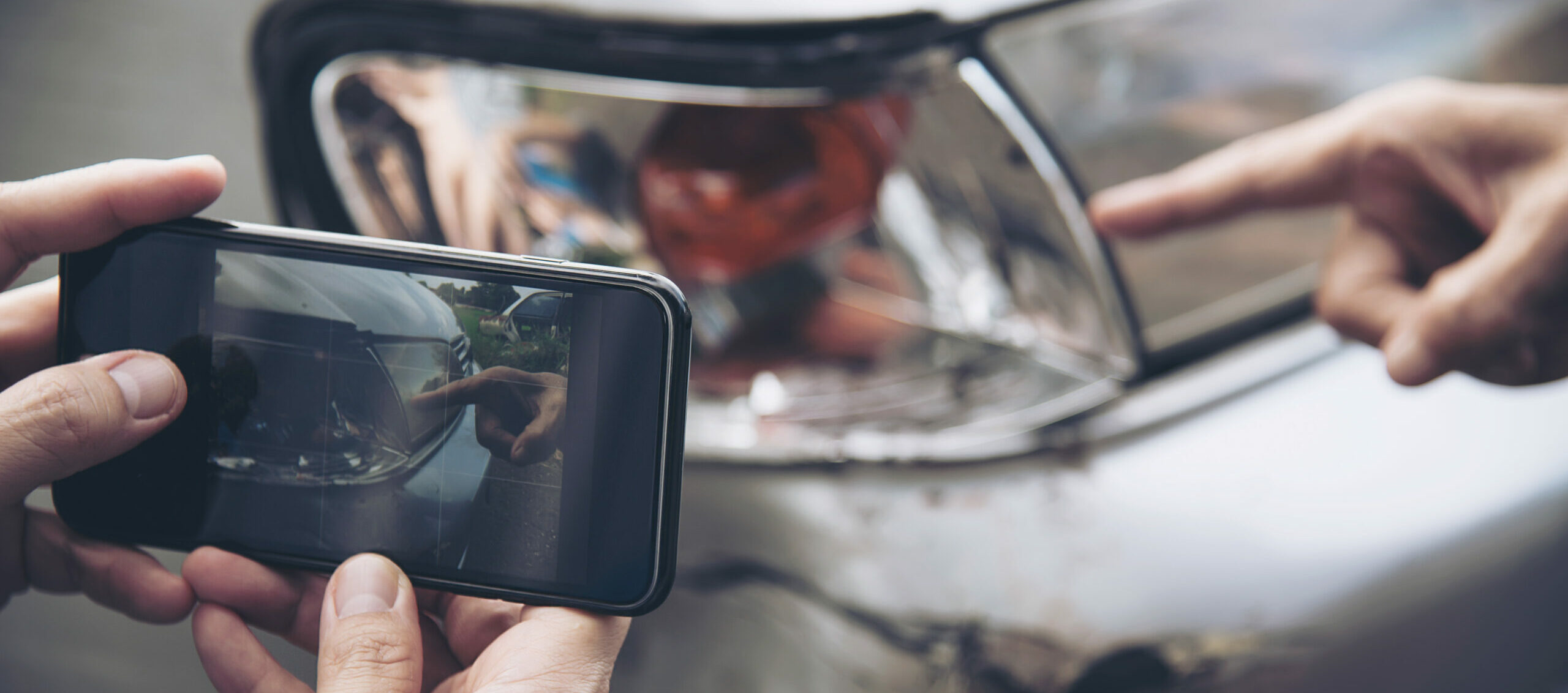
  • Always take pictures of the damage and make a detailed description of the damage (what, who, where, when, how,...).
  • If you need to send documents, do so in PDF format or bring them to the nearest office of your broker or insurance company. Photos of documents are not accepted in Spain.
  • All information must arrive by e-mail, on the spot or by post. Whatsapp and Messenger are not official channels but are tools.
  • The more serious you are in dealing with the damage, the easier it is to solve the problem

Important notes on theft, vandalism, burglary and/or robbery

It is very important to get a detailed statement from the Guardia Civil/Ordministrative services stating the correct dates when the facts occurred. Be sure to include the stolen goods and their respective values. Take your insurance policy details with you so that they can be included in the report.

How it works with Segurantis

Segurantis always tries to make the administrative process as simple as possible. As a result, Segurantis has a proactive website allowing you to open your claim file and to communicate all information. This not only ensures that your case is handled quickly and smoothly, but above all that all information is carefully documented to avoid any misunderstandings. The insurance company with which Segurantis works will always try to keep you informed of your claim by e-mail and SMS. You are always free to contact the insurance company yourself, always have your policy contract at hand.

Tip: You are in Spain and Spain is not Belgium or the Netherlands, respect the way the Spaniards work and have respect for the help they offer. In Spain, the official language is Spanish and many Spaniards try to speak a word of English so try to speak a word of Spanish for yourself, it always helps!

What can Segurantis do for you?

We can offer you different types of home insurance from basic cover to insurance of valuable art objects in your household.

A travel insurance that covers COVID-19?

Discover our comprehensive travel insurance

The corona measures are relaxed and we are thinking of travelling again, far away if possible because we are starting to get the urge to travel. But what about the corona measures and what if there is a sudden increase in the number of infections... Fear not,our travel insurance takes every scenario into account.

Travel itself has changed from before the Corona crisis in 2020. For the first time in probably many people's lives, there was a restriction on the free movement of people. A situation reminiscent of war, in this case war against a virus. As the restrictions eased, free movement was restricted by health measures that translated into extra passports and certificates to move between countries, and today we are facing an almost free movement again. Yet things are not the same.

Many travel organisations and destinations are increasingly requiring that people going on holiday are adequately covered in the event of an accident or someone falling ill. Especially the US and Canada are destinations that impose strict requirements on travellers by proving that they are sufficiently medically covered when entering the country. Now, in many cases, an additional requirement has been added, the COVID-19 coverage. A cover that, in case of an outbreak or lock-down, covers the travellers for medical costs and, if necessary, additional costs for compulsory stay or evacuation.

At Segurantis we offer travel insurance that guarantees cover and capital that most of the known companies cannot match. Our insurances are welcomed in countries with stricter requirements such as the USA and Canada where restrictions on medical cover are many times higher than in the rest of the world.

The standard covers are already sufficient for most demanding travellers, but even then we can extend them with options such as:

  • Winter sports cover, just think of evacuation by helicopter in case you slip on the slopes
  • Golf cover for your golf equipment and civil liability should you miss the ball
  • Sports and cycling coverage because you can buy a small car for the price of a good racing bike
  • Special items-coverage, not every day we have customers travelling around with their Van Gogh but it can be insured, also Rembrandt and Picasso or other particularly valuable items.
  • Wedding party cover in case that special day falls through
  • Terrorism cover for those who want to book, for example, Afghanistan or Baghdad as the ultimate summer holiday
  • Business travel cover in which your very expensive show equipment can be insured in case it is broken, stolen, destroyed or sabotaged by the competition during the trip
  • And the Covid19 cover, when a cold can suddenly threaten global health and cripple life

Among our standard coverages you will find:

  • The choice of a single trip or a continuous travel insurance
  • Extend the number of days per trip from the standard 17 to 32, 42 or even 90 days!
  • Coverage for within the EU, EU and the world excluding the USA or CANADA and the world including the USA and Canada.
  • Cancellation cover
  • Medical cover and repatriation from €1,000,000 to €10,000,000 (for those who like to travel extreme)
  • Luggage and personal effects
  • Money, documents and credit cards
  • Civil liability
  • Hijacking and kidnapping (land, sea and air)
  • Choice of franchise of 100 euros or 50 euros

You see, before you set off on your journey, stop in and see us so that we can take the time to work with you to ensure your protection during your travel plans. We will help you choose the appropriate protection for your destination and return. Do not hesitate to contact us for more information.

What can Segurantis do for you?

We can offer you travel insurance policies that are either continuous or temporary. Do not hesitate to come to us for a detailed discussion of our insurance products.

9 in 100 drive around uninsured

Almost 3 million road users in Spain drive around uninsured

According to a study organised at the request of the Spanish Parliament, a number of large Spanish insurance companies, together with the body managing the Disaster Natural Fund, have investigated how many uninsured vehicles are driving around in Spain. The results are alarming as they show that more than 2.9 million cars are driving around without the compulsory motor insurance. That corresponds to approximately 9 out of every 100 vehicles on the road every day.

Not having a valid ITV (MOT) is considered a serious offence with a fine of between 200 and 500 Euros but not having car insurance in order is an even more serious offence and can be fined between 601 and 3,005 Euros.

The Spanish road traffic law states that failure to comply with the obligation to have insurance cover makes it illegal to drive and that uninsured driving is punishable by fines of at least EUR 600 to EUR 3 000. The car is also confiscated and all costs are borne by the uninsured owner of the vehicle. A prosecution up to and including imprisonment is possible if several offences have been committed with the uninsured vehicle.

In Spain, every owner of a vehicle must have at least a civil liability insurance that covers the damage it may cause to third parties. However, the number of uninsured drivers is worrying. In Spain, this phenomenon is called the 'zombie cars', that is, cars without compulsory minimum insurance. In 2020 alone, more than 20 000 uninsured vehicle accidents were recorded.             

If an accident occurs in which the other party is at fault and is not insured, a collision form should be filled in giving details of the other party's driver and vehicle or, if this is not possible, call the authorities - the Guardia Civil or Policia Local - so that they can report the incident. If the affected party offers you a sum of money for not calling the police, it is better not to accept this, as injuries may occur or the damage to the car may be more serious than it appears at first sight.

Once the insurer has been informed, it will claim all damages, both material and personal, from the Disaster Relief Fund - Consortium - the body responsible for compensation in these cases. This compensation comes from the money collected from fines imposed on drivers who drive without compulsory insurance and is included in the premium you pay for your insurance. Once the victim has been compensated, the Insurance Compensation Consortium will claim all amounts from the guilty party.

As it stands, you know that if you are involved in an accident with an uninsured vehicle , the legal "agony" that is involved is slow and nerve-racking. Especially when this happens in a different language in a different country with different customs and operating processes. It is not easy to settle a dispute when all parties have agreed let alone when one of the parties is not in order and cannot pay.

Hopefully, it will not happen, but if you are involved, adequate legal cover is not a must, it is a lifesaver. Unfortunately, almost all vehicle insurances cover only limited legal coverage which in most cases is only up to 1,500 euros. You also realise that in case of an uninsured vehicle, the process of obtaining compensation will take a long time and this standard coverage is not sufficient. An additional insurance is then the solution.

Additional legal coverage can be obtained quickly for about 30 euros a year. The main coverage is, of course, the more extensive sum of money in legal coverage that the insurance offers and the additional support throughout the process which, for example, translates into the provision of an interpreter. The legal coverage for the follow-up of the file is standard 10,000 euros and continues at a reduced rate for the policyholder in case the process drags on. The team that defends you is usually made up of international lawyers with offices or branches throughout Europe, so that you can also go to your home country with questions and information.

Sources

What can Segurantis do for you?

We cooperate with several international providers that offer insurance with legal coverage in Spain and internationally. Do not hesitate to contact us for more information on the possibilities.

Avoid fines if you are on the road in Spain

Mandatory or non-mandatory

The items listed apply if you are driving with a Spanish licence plate - so your car is registered in Spain.

Fines for each item you do not have in order can amount to EUR 500.00.

Things may change in the future, so always check the latest news on the DGT website(www.dgt.es).

Below are 5 items that should be in the car:

  • Warning triangles: In Spain it is compulsory to have two warning triangles. In case of a breakdown, you must place a triangle in front of and behind the car (50 metres respectively). Since 01/06/2021, the warning triangle may also be replaced by the V-16 help flash light. From January 2026, only the V-16 help flash light will be valid.
  • Safety vests: the fluorescent vest must be within reach of the driver. We recommend that the number of vests in the car should be equal to the number of safety belts. That way, if there is a breakdown and you have passengers on the track, everyone can wear a vest when leaving the car.
  • Onboard documentation: Spanish onboard documents must be presented at all times. There is also a possibility to save your board documents on your mobile via DGT's digital app.
  • ITV sticker: A sensitive issue for many, but it is and remains mandatory. However, the sticker is increasingly disappearing from the street scene, although it is still compulsory.
  • Spare wheel or spare kit: You must be able to change or repair a tyre at any time. There are exceptions like run-flat-tires. If you cannot change your tyre yourself, you have to be able to call on a towing service that has insured you.

!!! The driver must at all times be able to produce his or her identity card and valid driving licence. In the case of Spanish-immatriculated vehicles, the road police can immediately find out who owns the car, whether there are any outstanding debts such as road tax, fines that have not been paid and whether the car is insured, on the basis of the registration certificate.

Source https://www.dgt.es/es/

What can Segurantis do for you?

Go to the overview of our services.